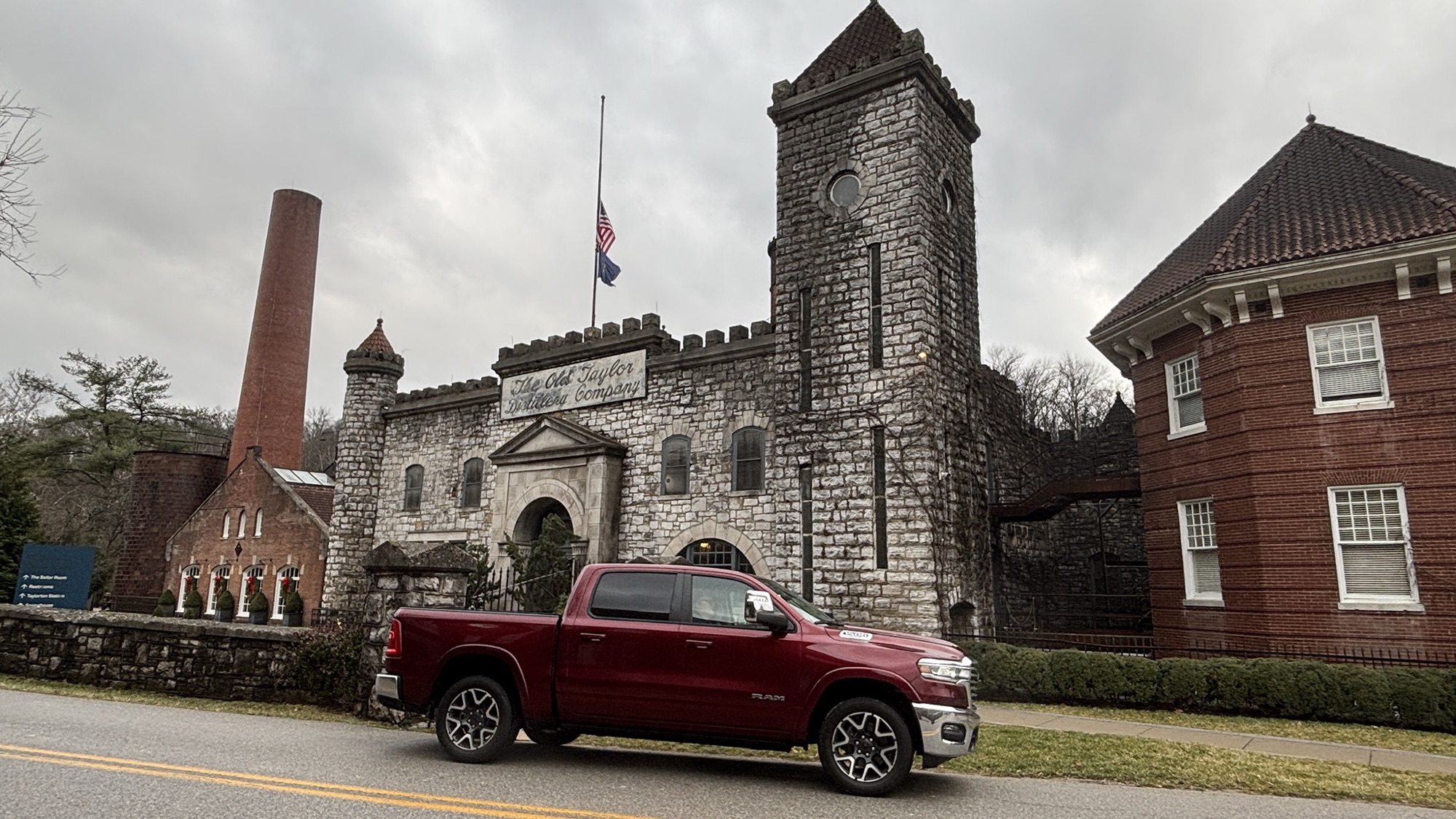
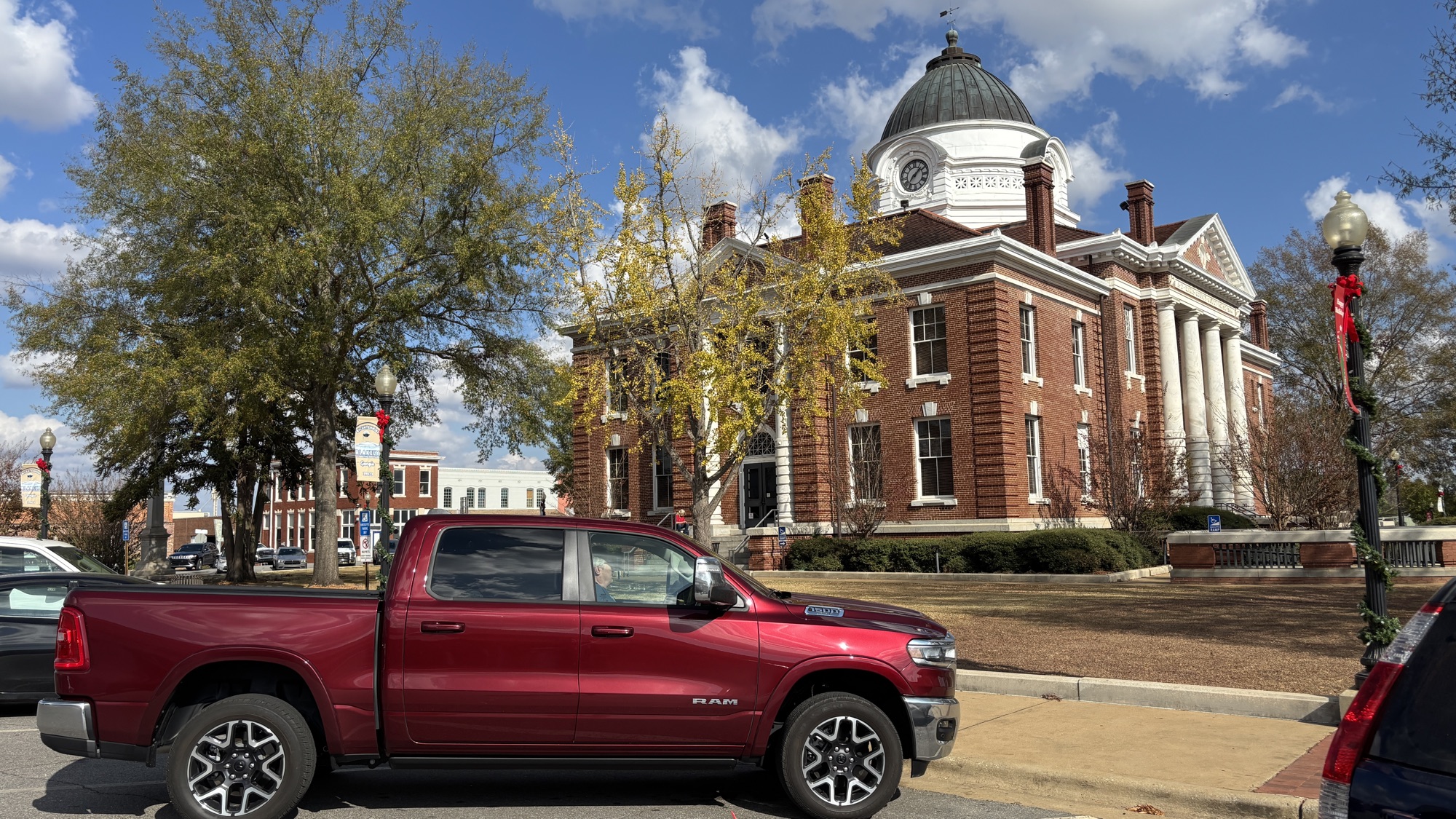
We plugged a coin-sized device into the Ram's OBD port and let it talk to itself for 263 days. 3.9 million sensor readings later, we asked the owner if we could publish them. What follows is a long-term test of the kind no press loaner can produce: the truck wrote it.
Over the test window, our Ram moved on 168 of 260 days. On the other 92, the engine never started. When the wheels did turn, the truck covered about 40 miles a day on average and half of all trips were under 16 minutes long. The single busiest hour of the week was Sunday at 3 PM — weekend errands, not commuting.
And then there's the other half of the story. Five days — Thanksgiving and Christmas — carried 28% of the year's mileage. Take those days away and the Laramie is a local errand vehicle. Keep them in and it's a real haul-and-tow truck. A reviewer who borrows it for a week only ever sees one of those two trucks.
Every place this Ram physically was for 263 days. Detroit is the bright knot at the top: home, the office, the dozen places you drive to without thinking about it. The line dropping south is the December haul to Memphis. Almost nothing else exits a 30-mile radius of the driveway.
It's the part of a long-term test press loaners can't show you. This isn't where reviewers drove. It's where the owner did.
The Ram pointed south before sunrise on the twenty-first. Christmas in Memphis, a Lexington overnight on the way home, and back to Detroit at dusk on the twenty-seventh. Seven days, three states, the whole 1,150-mile round trip. Press play.
Four findings that don't fit anywhere else, each backed by the raw telemetry behind it. Tap any one for the longer version.
OBD health checks. Zero faults across the whole test window.
How we know →Cold-soaked starts in a Michigan winter. Coldest: 3.2 °F.
A Michigan winter, logged →Lifetime MPG. Within rounding, exactly the EPA sticker. Almost no half-ton does this.
How we hit the sticker →Top speed observed across the whole window. Once, on a Saturday. The truck recorded itself.
The one Saturday it stretched its legs →Every signal you've seen on this page was streamed by the vehicle itself, recorded on the DIMO network, and published because the owner gave us permission to do so. The last part used to be the hard part. Most car data still lives behind a manufacturer wall. This is what one owner did with theirs.
The five findings our data desk pulled out are in the analyst's notes. The number-by-number breakdown is in the data tab. The methodology page shows the math.